The Complete Guide to Apartment Newsletters (2026)
Everything a property manager needs to run a resident newsletter residents actually open: what goes in it, how often to send, which channel to use, and how to know it's working.
Most apartment newsletters fail in the same quiet way. The manager spends a Friday afternoon on it, sends it, and hears nothing back. Not complaints, not questions, nothing. So the next one slips a week, then a month, and by spring the "monthly newsletter" is a flyer by the mailboxes.
That's not a writing problem. It's a system problem, and it's fixable. This guide covers the whole thing: what belongs in an apartment newsletter, how often to send it, where residents will actually read it, how to get them to answer back, and how to tell whether any of it is working. It's written for the on-site manager doing this alongside everything else, not for a marketing department.
How often to send it
Monthly. Not because weekly is too much work, though it is, but because monthly is the cadence residents will keep reading. A weekly newsletter trains people to skip it. A quarterly newsletter is forgotten between issues. Monthly is often enough to be a habit and rare enough to be an event.
Pick a day and hold it. The first weekday of the month works well because rent is on residents' minds and they're already looking for the property's messages. If something urgent happens mid-month, send it as its own notice. Don't hold it for the newsletter, and don't let it turn the newsletter into a crisis bulletin.
Text, email, or the portal: where residents actually read
This is the question that decides whether the newsletter gets opened, and the honest answer is "wherever you already reach them, and probably more than one place."
- Text has the highest open rate of anything you send, by a wide margin. It's also the channel residents guard most, so it only works if what you send is short and worth it. A text that says "October newsletter is up, here's the link" gets opened. A text with four paragraphs gets you blocked.
- Email is where longer content lives, and it's still the default for many communities. Open rates are lower and falling, and anything with images and columns renders differently in every inbox. Email is fine as the copy of record, not great as the thing you rely on.
- The portal is where residents already go to pay rent, so an announcement there gets seen at least once a month. It's also where nobody goes to read anything, so it's a place to post the newsletter, not a place to send it from.
The approach that works: publish the newsletter as a single page with its own link, then send that link through every channel you already use. One text, one email, one portal announcement, all pointing at the same page. Residents open it where they happen to be, the content renders the same everywhere, and you never format the same issue three times. We built NeighborlyBuzz around this idea for a reason, but it works with a Google Doc if that's what you have.
Getting residents to answer back
The single biggest upgrade to a newsletter is the moment a resident can do something inside it rather than just read it.
A monthly poll is the easiest place to start. Keep it to one question with three or four options, make the question about something you'll actually change, and tell residents in the next issue what the answer was and what you did about it. That last step is the whole trick. Residents answer the second poll because they saw the first one matter.
Surveys work the same way at a slightly larger scale: three to five questions, once a quarter, about the things you can influence. Photo contests (best balcony, best pet, best Halloween door) get more responses than any survey and give you next month's feature for free.
Whatever you use, the answer has to happen where the resident already is. A poll that requires opening a second app, creating a login, or finding an email from three weeks ago doesn't get answered. A poll that's a tap on the newsletter page does. We've seen this play out enough that it shaped how NeighborlyBuzz handles engagement: polls, surveys, and photo calls live inside the newsletter page, and results land in the manager's dashboard without residents downloading anything.
How to tell whether it's working
You don't need a dashboard to measure a newsletter, though it helps. Three numbers tell you most of the story:
- Opens. If the newsletter is a link, how many residents opened it. Aim for half your units in the first week and watch the trend, not the absolute number. A drop usually means the send day slipped or the subject line stopped changing.
- Answers. How many residents responded to the poll or survey. Ten percent of units is a healthy start. Thirty percent means you've built a habit.
- Calls that stopped. Track the questions the office gets in a month. When "what are the pool hours" disappears from the list, the newsletter is doing its job.
The number that isn't on this list is unsubscribes, because a resident newsletter shouldn't have them. If residents are opting out, the issue is usually length or frequency, not the idea.
Getting started this month
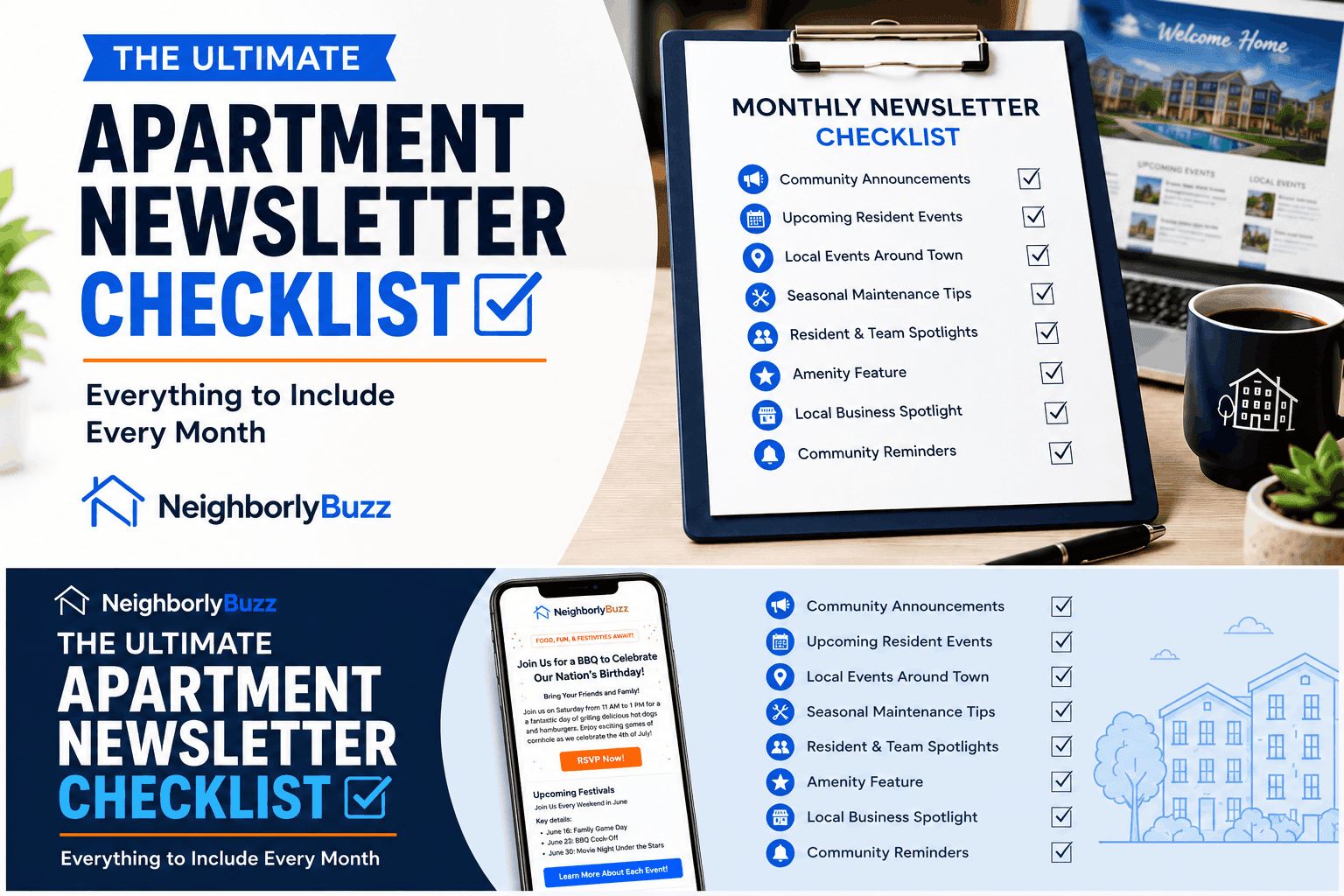
If you don't have a newsletter yet, here's the whole first issue: a two-sentence welcome, three announcements, one event with a date, one poll question, your office and maintenance numbers, three local events, and a sign-off. Publish it as one page, send the link by text and email on the first of the month, and put the same link in the portal.
If you do have one and it's fallen off, the fastest way back is to pick the send day, cut the length in half, and add the poll. The poll is the part that makes residents notice it's back.
See it on a phone
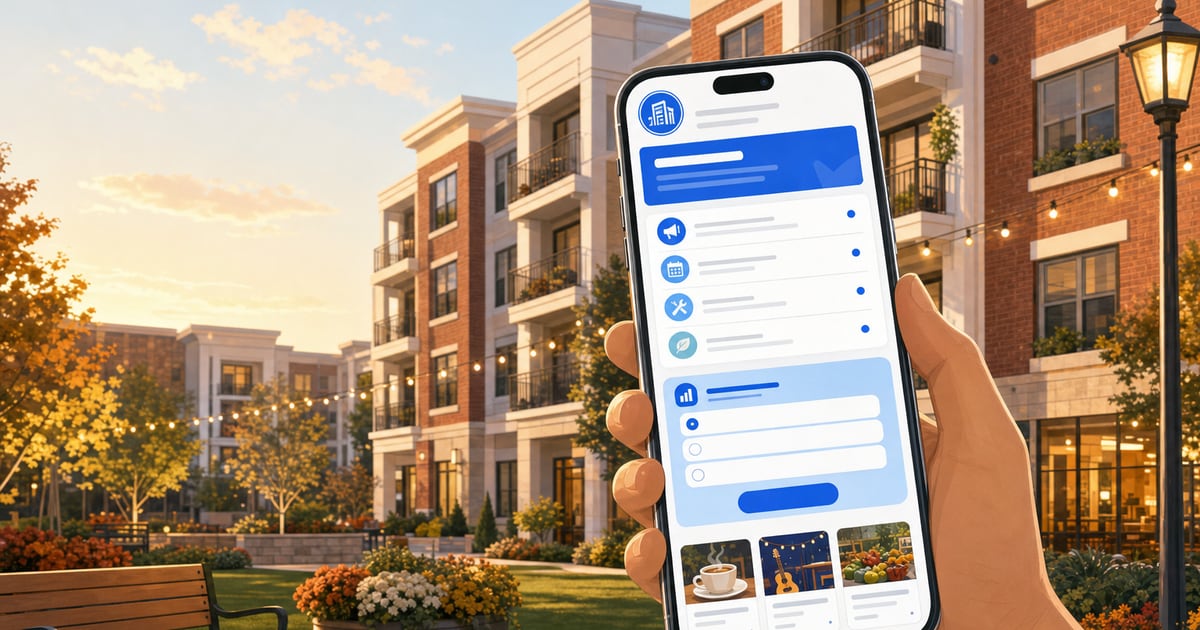
What a resident sees when the link arrives
Every month, NeighborlyBuzz builds a designed edition for your property with the local events already filled in. You add your announcements, publish, and send one link however you already reach residents. Polls and surveys live inside the page, Community Resources is one tap away, and nothing goes out from us. Your list, your sending.
If you'd rather see the story behind the product first, start with what NeighborlyBuzz is and why we built it.
Have a question?
Talk with NeighborlyBuzz
Ask us about resident newsletters, local content, demos, or getting your first property set up.
Keep reading
More on newsletters