Resident Newsletter Template: A Month-by-Month Plan for the Whole Year
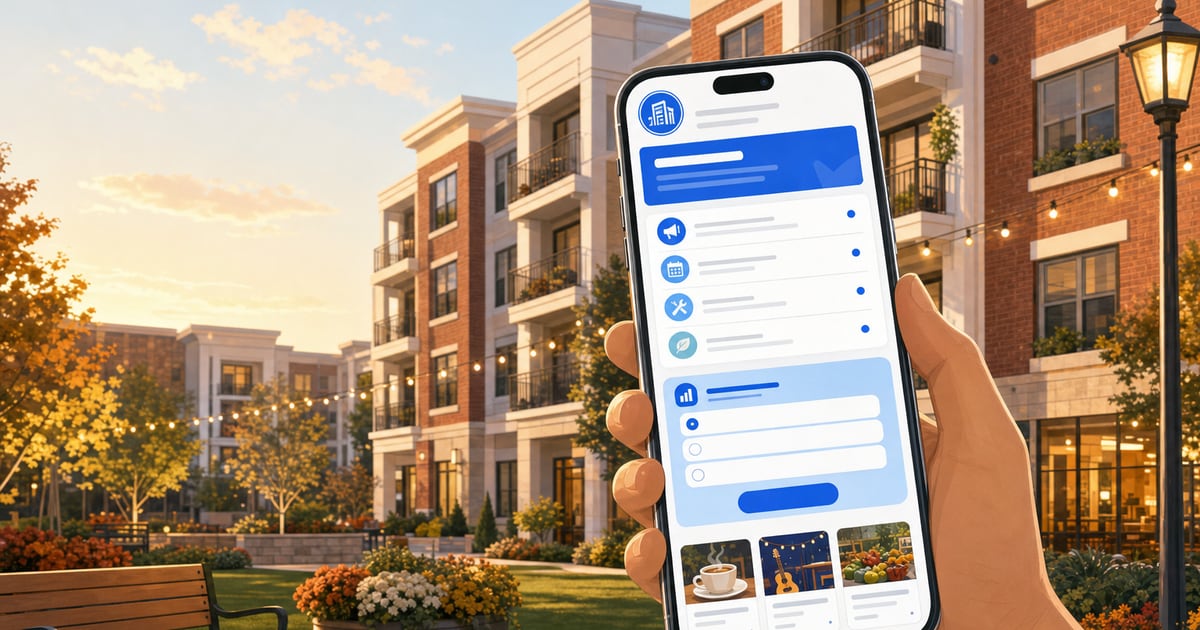
A resident newsletter template in two parts, a frame that stays the same every issue and a twelve-month plan for what goes in it, so the newsletter is never a blank page again.
Most resident newsletter templates are a layout: a header, three boxes, a footer. The layout is the easy part. The hard part is knowing what goes in the boxes in March, when nothing is happening and you have twenty minutes before your next tour.
So this template comes in two pieces. The first is a frame, six sections that appear in every issue in the same order. The second is a rotation, a month-by-month plan for what fills those sections across a whole year. The frame means residents always know where to look. The rotation means you never start from a blank page.
If you're new to resident newsletters, read the complete guide to apartment newsletters first. It covers why they work and how to send them. This post is the planning sheet.
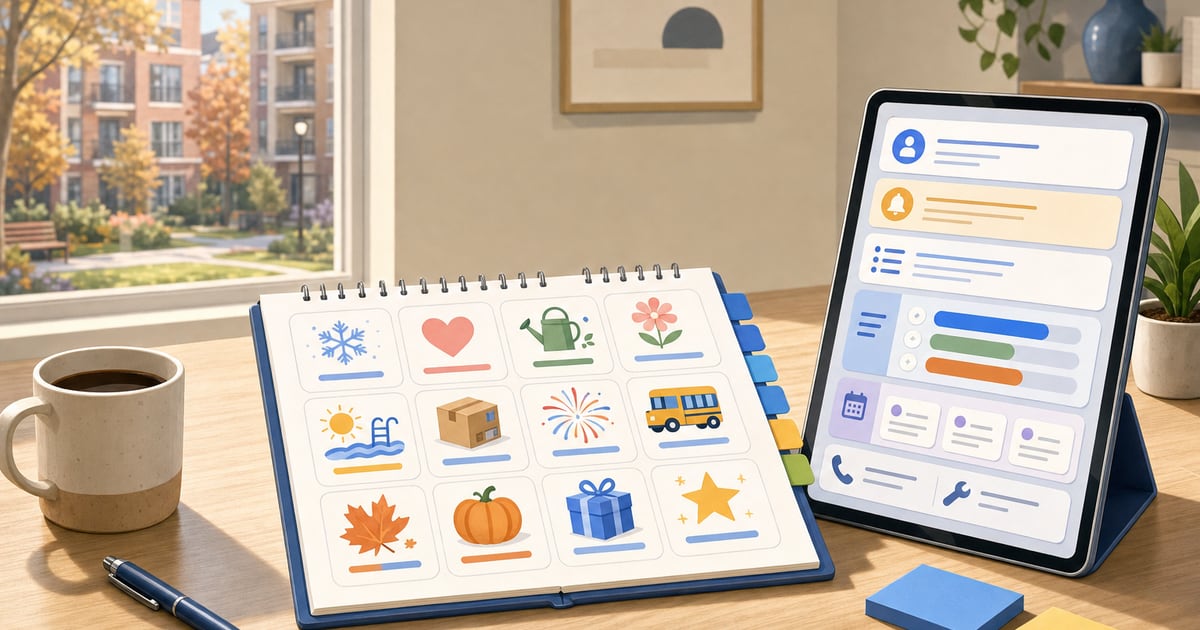
The frame: six sections, every issue
Keep these in the same order every month. Residents learn the layout after two or three issues and start skipping straight to the part they care about. That's a good thing. It means they're using it.
1. A note from a named person
Two or three sentences, signed by a real person on the team. What the month is about and one thing you're looking forward to. This is the only part of the newsletter that should never come from a template, and it's the part residents read first. "The Leasing Team" is not a person.
2. The one thing residents need to know
The most important operational item of the month, on its own, near the top: the water shutoff, the parking lot restriping, the new package lockers, the holiday office hours. If a resident reads nothing else, they should read this. If there's nothing urgent, use the most useful reminder for the season.
3. This month at the property
Events, amenity changes, maintenance on the calendar, anything new. Short items with dates. Three to five is plenty. A wall of announcements gets skimmed, and the item you needed people to see gets lost in it.
4. One question residents can answer
A poll, an RSVP, or a short survey. One question, three or four options, answered right on the page. Share the result next month. This is the section that turns a notice into something residents look for, and it's the only one that tells you anything back.
5. Around the neighborhood
Four or five local events: a festival, the farmers market, live music, something for kids. Title, date, a line, a link. Add a local business spotlight when you have one. This section keeps the newsletter worth opening in a month when the property itself is quiet.
6. Who to call
Office number and hours, the maintenance request link, the after-hours emergency line, and how to pay rent. The same block every issue. New residents haven't seen last month's, and long-time residents still forget where the emergency number is until they need it.
That's the whole frame. A good issue fills every section. A busy issue makes them longer. A quiet issue keeps them short. The order never changes.
The rotation: what goes in each month
Each month below has a theme, the operational item that usually belongs in section 2, a question for section 4, and a few things worth including. Adjust for your climate and your property. A Phoenix community and a Minneapolis community need very different Februarys.
January: the year ahead
- Need to know: winter weather procedures. Frozen pipes, heat settings, where to park when it snows, what counts as an emergency.
- Question: "Which event should we bring back this year?" with last year's three best-attended events as the options.
- Also include: planned projects for the year, the event calendar as far as you know it, any amenity changes. This is the issue residents keep.
February: staying in
- Need to know: heating and window tips, and the filter change schedule if you do one.
- Question: "What should we add to the clubhouse?" Board games, a coffee bar, a book swap shelf.
- Also include: a resident appreciation item for Valentine's week, indoor events, a local restaurant spotlight.
March: spring cleanup
- Need to know: spring maintenance schedule, landscaping and power washing dates, bulk trash pickup.
- Question: a short quarterly survey. Three to five questions on things you can change: communication, maintenance response, amenities.
- Also include: daylight saving reminder, spring cleaning drop-off or donation day, a team spotlight.
April: getting outside
- Need to know: pool opening date and rules, grill rules, balcony guidelines.
- Question: "Best day for a spring cookout?" or a vote between two spring events.
- Also include: Earth Day recycling refresher, local spring festivals, the results of March's survey and what you're changing because of it.
May: pool season starts
- Need to know: pool hours, guest policy, the key fob or wristband process.
- Question: "Which summer event are you most likely to come to?"
- Also include: Memorial Day office hours, a pet spotlight or pet-friendly local spots, moving season reminders if your lease cycle peaks in summer.
June: move-ins and long days
- Need to know: A/C filter reminders and what to do when the unit isn't cooling.
- Question: a photo contest. Best balcony, best plant, best pet.
- Also include: a welcome to new residents by first name with permission, summer events in town, the renewal timeline if your renewals cluster in late summer.
July: heat and travel
- Need to know: heat safety, holiday weekend fireworks rules, and what to do with packages while residents travel.
- Question: "What should we do for National Night Out?" if you participate.
- Also include: July 4th office hours, local fireworks and events, a "what we fixed" list for the first half of the year.
August: back to school
- Need to know: school bus stops, drop-off traffic, and parking changes if school traffic affects the property.
- Question: "What time works best for resident events?" Weeknights, Saturday mornings, Sunday afternoons.
- Also include: a back-to-school supply drive, local school calendar dates, the pool's last weekend.
September: fall routines
- Need to know: pool closing date, fall maintenance, pest control schedule.
- Question: a quarterly survey again, so you can compare to March.
- Also include: a resident spotlight, fall festivals in town, and the first mention of Halloween if you're running a contest or trick-or-treat event.
October: Halloween and the first cold night
- Need to know: heating system check, how to report a heater that won't turn on, and the first-freeze checklist if you're far enough north.
- Question: a costume or door-decorating photo contest, or an RSVP for the Halloween event.
- Also include: trick-or-treat guidelines, daylight saving ending, fall events around town.
November: thanks and packages
- Need to know: the holiday package surge. Where packages go, how long they're held, how to report a missing one.
- Question: "What are you thankful for this year?" or an RSVP for a Friendsgiving or potluck.
- Also include: Thanksgiving office hours, a donation drive, the October contest winners.
December: the year in review
- Need to know: holiday office hours, emergency maintenance coverage over the holidays, and travel tips like leaving the heat on and holding packages.
- Question: "Which event was your favorite this year?" Its answer is your January question.
- Also include: a year-in-review list of events held, things fixed, and poll results, plus holiday decorating guidelines and a thank-you from the team.
Using it without sounding canned
A template is a starting point, and residents can tell when nobody touched it. Three habits keep it sounding like your property:
- Write the note yourself, every month. Two sentences take two minutes. It's the difference between a newsletter and a mass email.
- Use real names and real places. "The gate on the north side is fixed" beats "recent maintenance has been completed." "The farmers market on 5th" beats "local events."
- Close the loop. Every question you asked last month gets an answer this month. "62% of you picked trivia night, so it's on the 14th." That's what makes residents answer the next one.
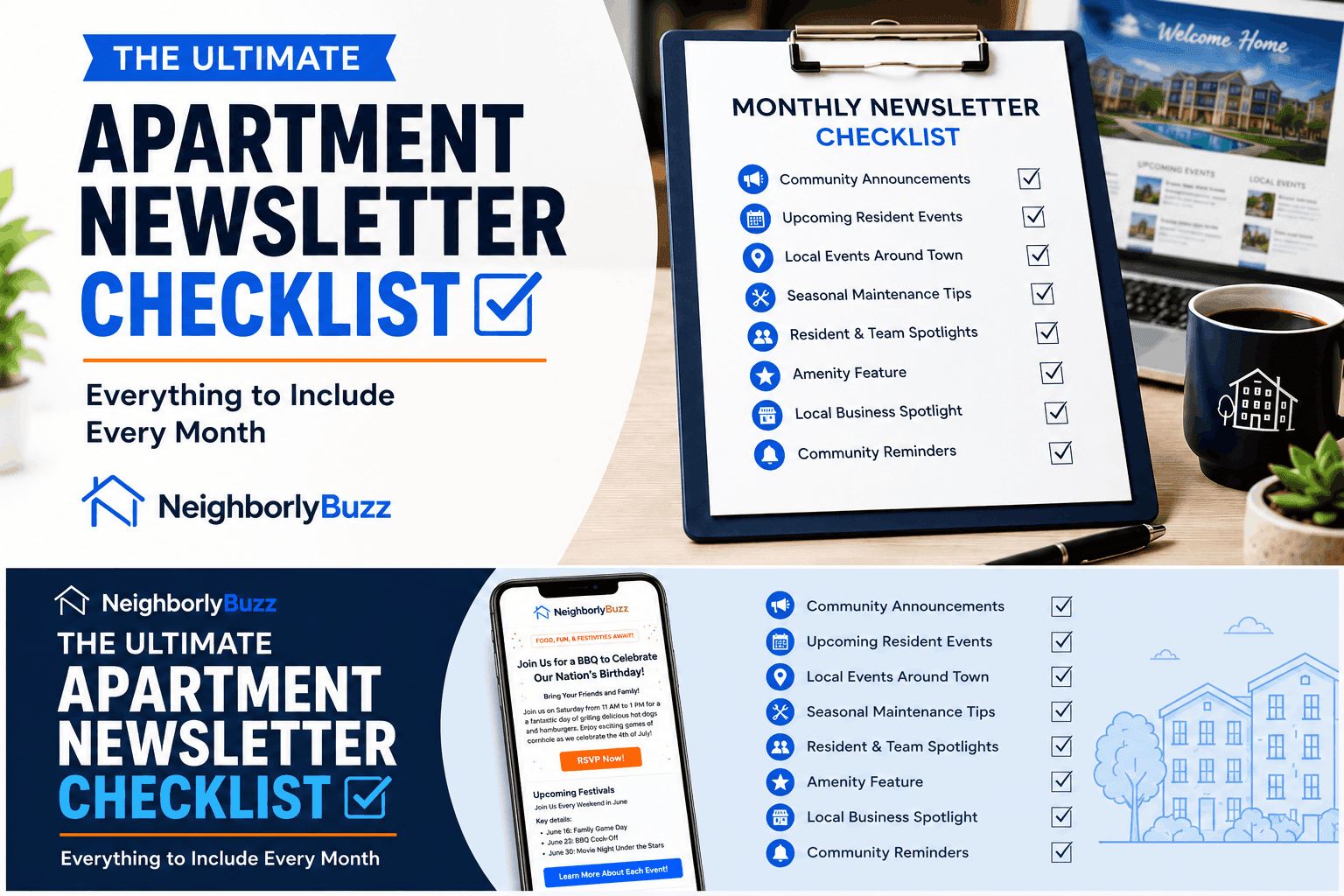
For a fuller list of section ideas to rotate in, 27 apartment newsletter ideas residents actually read sorts them by what they do for you. If you want a printable version of the frame, the apartment newsletter checklist covers everything to include every month.
Build the year once, reuse it every year
The real time savings come in year two. Keep every issue. Next January, open last January's, change the dates, swap the events, update the question, and write a new note. Most months, that's fifteen minutes instead of an hour.
A few things to keep in a running document as the year goes:
- Which events drew people, and roughly how many. Next year's question options come from this list.
- Which questions got the most answers. Repeat the format, change the topic.
- The seasonal reminders that cut calls. If the November package reminder cut the "where's my package" calls, it goes back in next November word for word.
- Local events that happen every year. The festival in May, the holiday market in December. Put them in the plan now so you don't have to hunt for them later.
The events section is also where residents get a reason to come to things you host. If events are a weak spot, why resident events matter more than most property managers realize covers what they actually do for retention.
Already planned
NeighborlyBuzz builds this rotation for you
Each month's edition arrives already following this frame, with local events filled in for your city, a seasonal poll ready to answer, the who-to-call block linked to your community resources page, and a few versions of the announcements to pick from. You write the note, add what's specific to your property, and send the link. If you want to see it on a phone first, the walkthrough takes a minute.
Have a question?
Talk with NeighborlyBuzz
Ask us about resident newsletters, local content, demos, or getting your first property set up.
Keep reading